Franchise Fixation: Halloween 5: The Revenge of Michael Myers (1989)
Just one year after Halloween 4 brought Michael Myers back from the dead, Halloween 5: The Revenge of Michael Myers nearly buried the franchise again. A rushed production, baffling creative decisions, and misguided attempts at humor make this one of the series' dullest installments.

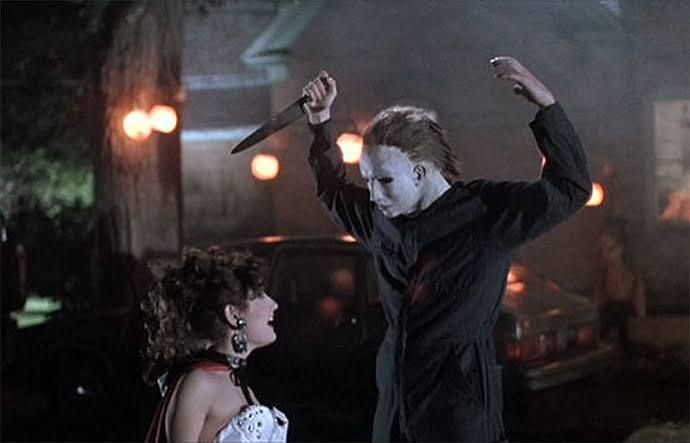
I hadn't planned on reviewing Halloween 5: The Revenge of Michael Myers on the 37th anniversary of its theatrical release, but here we are. On October 13, 1989, Michael Myers returned to theaters just one year after his previous outing had successfully resurrected the franchise. Unfortunately, while Halloween 4 showed the series still had life, its hastily assembled follow-up seemed determined to prove otherwise.
The fourth installment wasn't particularly ambitious, but it understood what audiences wanted from a return to Haddonfield. It brought Michael back, introduced a sympathetic protagonist in Jamie Lloyd, and surrounded her with people worth caring about. Most importantly, it delivered an ending that suggested the franchise might actually take a significant creative risk.
Halloween 5 had an opportunity to explore that ending. Instead, it largely ignores its implications, disposes of one of the previous film's most likable characters, introduces irritating replacements, and spends much of its running time struggling to generate suspense. Its biggest problem isn't that it's the most ridiculous or even worst movie in the franchise. It's that it might be the most boring.
Picking Up Where We Left Off (Sort Of)
One of Halloween 4's smartest decisions was its conclusion. After Michael is seemingly destroyed, Jamie (Danielle Harris) suddenly attacks her foster mother, Darlene Carruthers (Karen Alston), with scissors. Dr. Loomis (Donald Pleasence) discovers the aftermath and is horrified by the possibility that Jamie may be following in her uncle's footsteps, a fear made all the more disturbing by the visual parallels to Michael's murder of his sister fifteen years earlier. It was an unsettling final image, suggesting that Michael's evil might have found a new home in his niece.
Whether the filmmakers intended to turn Jamie into the next killer or explore a supernatural connection between her and Michael (played by Don Shanks in this installment), the ending opened the door to possibilities beyond another round of Michael escaping death and stalking teenagers. Unfortunately, Halloween 5 chooses the latter.
The film revisits the previous climax to reveal that Michael escaped by crawling into a stream. He finds refuge with an elderly hermit who nurses the severely injured stranger back to health and apparently lets him stay for a full year. When Halloween comes around again, Michael awakens, kills his caretaker, and heads back toward Haddonfield.
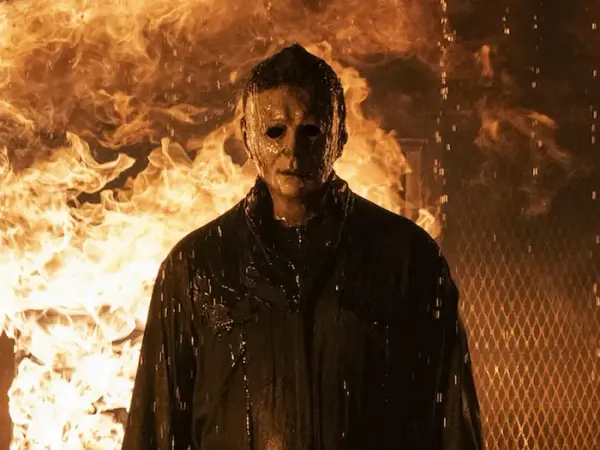
It's hard to say which is sillier: the survival itself, or the idea that someone kept this silent stranger around for twelve months without getting suspicious. At least the hermit was considerate enough to hang onto Michael's mask. It's clearly a different mask, too. I don't usually get into the endless Myers mask debates, but this one might be the worst in the series.
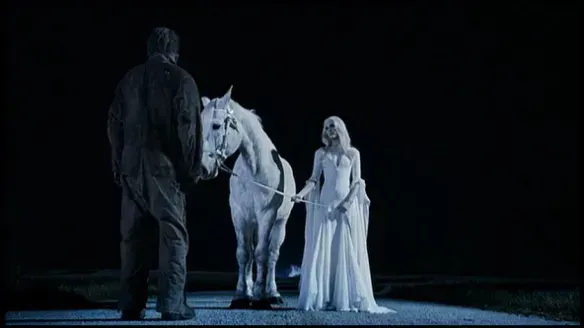
As many fans know, this movie was filmed with a different opening. Once thought lost, it was eventually recovered and is available on the Halloween 5 collector’s edition 4K from Shout! Factory. This version opens with a character known as Dr. Death (Theron Read), who finds an unconscious Michael, brings him into his shack, and places him on a stone altar. An occult ritual is performed, and a mysterious Thorn rune symbol is tattooed onto Michael’s wrist. This would, of course, tie into a lot of exposition in Halloween: The Curse of Michael Myers. Whether that works in the next sequel is up to you, but it might have at least provided a more interesting introduction to Halloween 5. Ultimately, the filmmakers decided that the sequence pushed the franchise too far into supernatural territory, clashing with the more grounded slasher approach of the previous Michael Myers installments. The opening was subsequently reshot.
Meanwhile, Jamie has been placed in the Haddonfield Children's Clinic after attacking her foster mother. She's suffering from trauma that has left her unable to speak, although she can apparently sense Michael's activities through a mysterious psychic connection. The film barely addresses the implications of her attack on her foster mother. Someone throws a brick through her window with a note declaring, “The Evil Child Must Die!” It's a fascinating suggestion that Haddonfield now sees Jamie as a threat, but the movie promptly moves on without giving us any more insight into it.
The Problem with Killing Rachel
Perhaps the film's most frustrating decision is how it treats Rachel Carruthers. Ellie Cornell made Rachel one of the primary reasons Halloween 4 worked. She was intelligent and likable, and her relationship with Jamie gave the movie an emotional center. Rachel wasn't simply a teenager waiting for her turn in the body count; she was a protective sister we wanted to see survive.
Halloween 5 kills her almost immediately. Rachel discovers signs of an intruder in her house, encounters Michael, and is brutally murdered. The sequence isn't especially suspenseful, and her death provides no meaningful dramatic payoff. It exists largely to surprise an audience that assumed a survivor from the last movie might be safe for at least a little while.
It reminds me of Alice's abrupt death at the beginning of Friday the 13th Part 2. Nancy's fate in A Nightmare on Elm Street 3: Dream Warriors is another comparison, though at least Nancy gets to contribute substantially before she dies. Rachel doesn't get that consideration. She's essentially written out before the sequel gets going.
An earlier plan reportedly would have kept Rachel alive until later, when she would die protecting Jamie. That would have been a much more satisfying end for a character whose entire appeal rested on that relationship. Instead, the movie sacrifices its strongest returning supporting character for a quick shock, and then has to find someone else to fill the space.
Enter Tina, Unfortunately
That someone is Tina Williams, played by Wendy Kaplan. Tina is loud, impulsive, and frequently oblivious to the danger surrounding her. Where Rachel brought maturity and genuine concern to Halloween 4, Tina often seems to have wandered in from a different slasher franchise.
I want to make this clear: I have zero issue with Kaplan’s performance, and everything I’ve ever heard is that she is an extremely nice person and always fun to see at conventions. She seems to play the character exactly as written, and she’s not even an unbelievable teenager. The problem is that the film makes her a central figure without making her particularly compelling. Her friendship with Jamie is supposed to replace some of the emotional connection lost with Rachel, but the bond never feels nearly as convincing. Tina cares about Jamie, certainly. Her priorities just have a way of wandering elsewhere. It also doesn’t help that the movie never gives her and Jamie's relationship enough time to establish. It’s more concerned with rushing to a final act where Loomis, completely off his rocker, uses Jamie as bait for Michael, and more on that plot point later.
Another thing about the Tina problem is that her friend group doesn't help. Their conversations, romantic troubles, and attempts at comic relief occupy an extraordinary amount of screen time without giving us much reason to care what happens to them. She’s dating a “too cool for school” guy named Michael (Jonathan Chapin), leather jacket and an annoying car he’s “so protective” of included. Her best friend, Samantha (Tamara Glynn), has the traditional ‘80s movie trait of being the cute friend who isn’t sure if tonight should be “the” night with her boyfriend, Spitz (Matthew Walker). Spitz, by the way, has the fun cliché of being the friend group's practical joker; unfortunately, the jokes aren’t funny, and neither is Spitz. Rachel was already established as someone who could have carried this material. The sequel trades her for a group of people, and it then struggles to make any of them interesting.
Tina eventually sacrifices herself to protect Jamie, a moment clearly intended to demonstrate her courage. Kaplan does what she can with it. Unfortunately, one decent character moment near the end doesn't make the preceding hour more engaging.
Jamie Lloyd Deserves Better
Danielle Harris was excellent in Halloween 4, giving Jamie vulnerability and emotional authenticity that set her apart from the typical child in peril. Here, Harris is again called upon to convey terror, but leaving Jamie mute for much of the movie severely restricts her role. It's reminiscent of Jamie Lee Curtis spending much of Halloween II confined to a hospital bed. Both sequels take the performer who anchored the previous film and limit what she can do. Harris remains effective, especially in the more physically demanding suspense scenes, but Jamie spends too much time reacting rather than driving events. At least Halloween II had the excuse that it continued the movie just moments after the previous film ended, so Laurie being confined to a hospital bed made logical sense. However, with Halloween 5 it’s a year later. With so many options, going with this one feels odd.
Her psychic connection with Michael is another problem. Sometimes she senses his presence or has visions of what he's doing. At other times, that ability becomes conveniently unreliable because the screenplay needs Michael to remain undetected. Introducing a supernatural connection is not automatically a bad idea for a series whose killer keeps surviving impossible injuries. It should, however, be consistent.
The larger disappointment is the retreat from Halloween 4's ending. Instead of examining whether Jamie might be capable of Michael's evil, the sequel makes her another frightened child who needs rescuing. It's hard not to wonder what Harris could have done with a screenplay willing to follow through on that earlier film's final image.
Michael Myers, Designated Driver
For a movie that struggles to generate suspense, Halloween 5 contains some genuinely bizarre sequences. One of my favorites, although not necessarily for the intended reasons, involves Michael driving Tina around town.
Tina thinks she's riding with her boyfriend, who, as I mentioned, is also named Michael. The actual Michael patiently transports her, even stopping to let her buy cigarettes. It's an unexpectedly considerate gesture from a man who has spent the better part of two movies murdering people associated with his family.
The scene attempts to exploit our knowledge of the driver's identity. We know who he is, and Tina doesn't. That's a perfectly sound suspense setup. Unfortunately, the longer Michael plays chauffeur, the harder it is to take the sequence seriously. He's supposed to be an almost elemental force of evil, not somebody willing to accommodate a quick errand.
Then there are the two police officers (Frankie Como, David Ursin) and the ridiculous musical cues that accompany them. The soundtrack abruptly shifts to a goofy, exaggerated tone that feels disconnected from the rest of the movie. Whether intended or not, it definitely makes one think of the weird score that accompanied the cop characters in Wes Craven’s Last House on the Left. Craven has always said he chose the music to provide a dark comedic contrast to the brutal violence on screen. I’m not sure what the intention was here. Comic relief has a place in horror. The original Halloween had moments of humor, and Halloween 4 allowed its characters to behave like recognizable people. Halloween 5 practically announces when we're supposed to laugh, whether anything funny is happening or not.
When All Else Fails, Blame the Director
It might be too easy to blame director Dominique Othenin-Girard for the movie's failures, but behind-the-scenes accounts suggest a pretty good case for doing exactly that.
Othenin-Girard reportedly clashed with cast members, particularly Donald Pleasence, who objected to the director's increasingly unhinged interpretation of Dr. Loomis. Ironically, Loomis's deteriorating mental state has become one of the film's more entertaining aspects for some fans. Othenin-Girard also reportedly disregarded much of Shem Bitterman's original screenplay, leading to cameras rolling before the script was finished. Considering how rushed the production already was, that couldn't have made matters any easier.
The director also wanted Michael Myers to appear more human, an approach that culminates in one of the film's more controversial moments. When Jamie appeals to her uncle, Michael removes his mask and actually sheds a tear. I'll admit that I go back and forth on this scene. I appreciate that it gives Danielle Harris a chance to do something more substantial with her character, and I don't necessarily object to briefly exposing Michael's humanity. The execution, however, leaves much to be desired.
A number of the strange attempts at humor we've already discussed can probably be attributed to Othenin-Girard as well. According to behind-the-scenes accounts, he largely came up with the bumbling police officers. What's especially frustrating is that, compared with many other slasher franchises, Halloween has generally done a reasonably good job of portraying its police officers as competent and trustworthy. Turning them into comic relief feels particularly out of place in a series that has typically treated Michael Myers' threat with some degree of seriousness.
Look, the production was rushed, and that's never an ideal situation for a filmmaker. However, directors like Renny Harlin on A Nightmare on Elm Street 4: The Dream Master and Darren Lynn Bousman on the early Saw sequels delivered effective horror films under similarly demanding circumstances. A difficult production schedule can explain some of a movie's shortcomings, but it doesn't automatically excuse them.
More importantly, the rushed schedule doesn't make Othenin-Girard's creative choices any more successful. The misguided humor, the questionable handling of Michael and Loomis, and the story's increasingly muddled direction remain problems regardless of how much time the filmmakers had to work with. Then there's the Man in Black, whom we haven't even gotten to yet.
Of course, Othenin-Girard's interpretation of Dr. Loomis deserves a closer look, because that's where some of the film's strangest creative decisions become impossible to ignore.
Dr. Loomis Crosses a Line
Speaking of unhinged Loomis: Donald Pleasence has always been one of this franchise's greatest assets. His Loomis can make the most outrageous material entertaining because he believes every word. By this point, however, Loomis has become so consumed by his pursuit of Michael that he occasionally resembles a threat himself.
His treatment of Jamie is particularly troubling. Instead of recognizing how badly she's been traumatized, Loomis increasingly regards her as a means of reaching Michael. He ultimately uses her as bait. There's a potentially interesting character development here: a psychiatrist so obsessed with destroying evil that he's willing to endanger the very child he ought to protect. Unfortunately, the film doesn't spend much time examining that contradiction. Loomis grows more frantic because the plot requires it. Pleasence remains committed, and his presence gives the movie some continuity with earlier installments, but it becomes increasingly hard to see Loomis as the reassuring moral anchor he once was.
The House That Michael Built
Michael's mask isn't the only thing that's changed. His childhood home, once an ordinary suburban residence, is now a huge, vaguely Gothic mansion with an elaborate interior and seemingly endless places to hide. Fans spend years arguing about the changing masks, but the Myers house undergoes an equally spectacular transformation here.
I understand the practical appeal. A sprawling house provides corridors, staircases, and dark spaces for the climax. Still, the original home's normalcy was part of what made it disturbing. Turning it into something resembling a haunted-house attraction makes the location feel less like Haddonfield and more like generic Gothic horror scenery.
I will credit the movie for this, though; the redesigned house gives the movie one of its best sequences. Jamie becomes trapped in a narrow ventilation shaft while Michael tries to reach her. The confined space limits her options, and Harris makes the danger feel immediate. It's effective because the situation is simple: someone we care about is trapped, Michael is closing in, and escape seems nearly impossible.
The sequence doesn't need psychic visions or a mysterious mythology. It just needs Michael Myers pursuing someone we want to survive. It's telling that one of Halloween 5's most memorable moments is also one of its most straightforward. For a split second, we’re back in the suspenseful territory of what made the original film and parts of its sequels work. If Halloween 5 had more moments like this, it could’ve been great, or at the very least good.
A Man in Black, and a Mystery Without an Answer
As though Jamie's psychic connection weren't enough, the movie introduces a mysterious stranger dressed entirely in black. He appears periodically, apparently connected to Michael, but the film gives us little indication of who he is or what he wants.
At the climax, after Loomis captures Michael and the killer is taken into custody, the Man in Black attacks the police station and frees him. Jamie discovers the aftermath and realizes that her uncle is loose again. As cliffhangers go, it's kind of fun. Michael Myers apparently has a mysterious benefactor willing to assault a police station to secure his freedom.
The trouble is that the mystery doesn't feel like part of a carefully planned story. Production accounts indicate the filmmakers hadn't settled on the stranger's identity or purpose. That leaves the next installment with the unenviable task of making sense of something introduced largely to create questions.
Halloween: The Curse of Michael Myers would eventually develop the Cult of Thorn mythology to supply those answers. Whether they were worth waiting for is a discussion for the next review.
A Sequel Without a Pulse
The most frustrating thing about Halloween 5 is that its failures aren't limited to one misguided choice. Killing Rachel was a mistake, but a stronger film might have recovered. Jamie's muteness was restrictive, but Harris still delivers effective moments. The psychic connection might have been interesting if anyone had decided what it actually meant. Even the Man in Black could have worked with a clearer destination in mind.
Instead, the problems pile up without producing much excitement. The opening credits offer an early warning. Where Halloween 4 used autumn imagery to establish a moody atmosphere, this film mostly presents credits over black, interrupted by an aggressively carved jack-o'-lantern and exaggerated swooshing effects. It has a mean-spirited quality that carries into Rachel's death and some of the film's nastier choices.
Yet despite that harsher tone, the movie rarely feels dangerous or frightening. It mostly feels tired. The characters aren't engaging, the suspense is inconsistent, and the screenplay jumps between ideas that never quite cohere. It's remarkable that a movie containing so many peculiar decisions can feel so lifeless.
Halloween 4 wasn't perfect, but it successfully reestablished the franchise's potential. It introduced characters worth following, restored Michael as a threatening presence, and ended on a genuinely provocative twist. Halloween 5 takes nearly everything that worked and either abandons it or diminishes its importance.
There are pleasures here. Harris remains compelling, Pleasence gives everything he has, the ventilation-shaft sequence is a terrific little piece of suspense, and the cliffhanger has a certain ridiculous charm. Those moments aren't enough to overcome the mishandling of Rachel, Jamie's wasted potential, and the extraordinary amount of time spent with people who barely register.
For all its strange ideas and elaborate mythology, Halloween 5 commits what might be a slasher movie's greatest sin: It's dull. Thirty-seven years later, that's more damning than any argument about the mask, the house, or the mysterious Man in Black.
Halloween 4 brought Michael Myers back to life. Halloween 5 gave him surprisingly little worth doing.
THE FIXATION SCALE
★★☆☆ — 2 out of 4