Franchise Fixation: Halloween Ends (2022)
The Shape steps aside, a new evil moves in, and thirteen movies bring us back to the beginning.

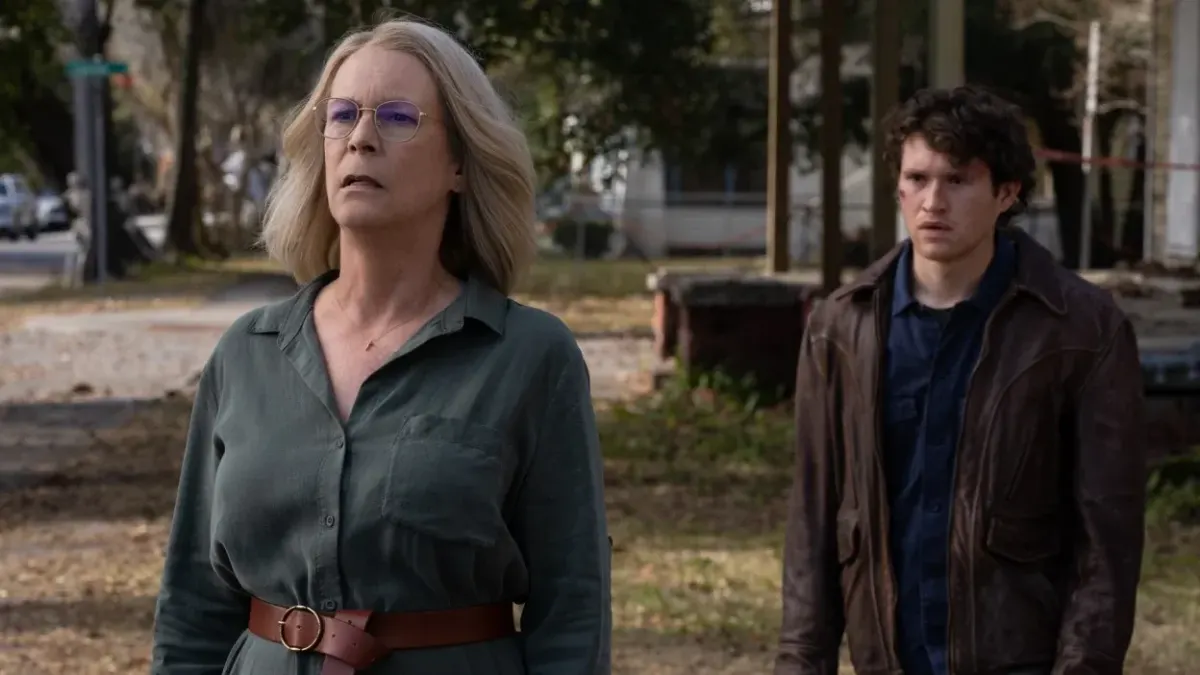
I’ve spent the past month revisiting every Halloween movie, and we’ve finally reached the one that promised to end it all. Not the franchise, obviously. I don’t think anyone seriously believes a title like Halloween Ends means we’ll never see another person put on that mask. This was supposed to be the end of David Gordon Green’s trilogy, the end of Laurie Strode’s latest confrontation with Michael Myers, and perhaps the end of a story that started in 1978. So naturally, the movie spends much of its running time following a guy named Corey Cunningham.
That decision isn’t automatically a problem. In fact, I can see a version of Halloween Ends built around Corey that I might have really liked. I can also see a version that gives Laurie and Michael a proper final confrontation. What I have a harder time seeing is how these two movies were ever supposed to fit comfortably inside the same one. Halloween Ends takes a swing, and I appreciate that. I just don’t think it connects.
The Babysitter Murders, Revisited
We open on Halloween night in 2019, a year after the events of Halloween (2018) and Halloween Kills. Corey Cunningham (Rohan Campbell) has a babysitting job that, given Haddonfield's history, should probably come with hazard pay. What follows is a genuinely nasty little sequence that ends in tragedy, and I think it does a better job of showing how Michael Myers has poisoned this town in a few minutes than much of Halloween Kills managed over an entire movie.
There’s also a lovely little bit of Carpenter trivia folded into the scene. The original Halloween has The Thing from Another World playing on television. Here, the movie on television is Carpenter’s own The Thing. It’s the kind of reference I enjoy because it doesn’t require the film to stop and congratulate itself for knowing another film exists. It’s a little bit wink-wink and a little bit of fan service, but some fan service can absolutely work, and this is one of those cases.
More importantly, Corey’s ordeal gives the movie a potentially compelling direction. He isn’t Michael Myers. He hasn’t deliberately done something monstrous. Yet Haddonfield needs somewhere to put its fear and anger, and Corey becomes a convenient target. That’s an interesting way to explore a town that has spent decades living under the shadow of one killer. What happens when the Boogeyman disappears but everyone still needs a monster?
After that prologue, we jump forward four years. I actually like the time jump in theory. It gives the town and the survivors space to change, and it lets the movie ask what life looks like after the immediate crisis. Unfortunately, it also leaves us with a fairly significant question: What the hell has Michael Myers been doing this whole time?
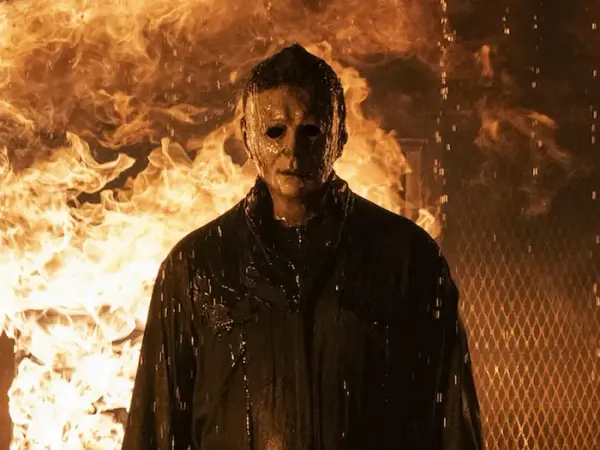
The answer, more or less, is that he’s been living beneath a bridge or in the nearby sewer system. Turning one of horror’s most terrifying villains into the Troll in Central Park is certainly a choice, and I suppose I have to give David Gordon Green credit for having the balls to make it. Unfortunately, that doesn't mean it makes much narrative sense. We can assume Michael is badly injured after the mob attack in Halloween Kills, but that film’s ending seemed determined to suggest he was something more than a man who could be beaten into submission. He survived the assault, got back up, and killed Karen. Now he’s apparently spent four Halloweens hiding underground, waiting for the plot to remember him.
I’m not demanding a medical chart or an explanation of how Michael gets groceries. As I’ve said way too many times in all these reviews, what makes the original film so much scarier and more mysterious is that it refuses to explain too much about him. Yet this is a different problem. Halloween Ends asks us to accept a major shift in the character’s behavior without doing much to make that shift dramatically satisfying, and it’s going against its own narrative setup in the previous two films. Mystery can be frightening. Confusion about what the screenplay wants a character to be is another matter.
Corey Cunningham Has Entered the Chat
Campbell is good as Corey. He gives the character a wounded quality that makes his early scenes work, and there’s something unsettling about watching his isolation gradually curdle into resentment. The movie’s best idea may be that Haddonfield is so determined to see Corey as a monster that it helps create one. That could have been the whole movie. I wish the filmmakers had trusted it enough to let it breathe.
Instead, Corey’s relationship with Michael takes a turn that I find increasingly difficult to make sense of. Corey encounters him, survives, and then the two begin operating in a way that looks suspiciously like a partnership. At times Corey seems to be bringing Michael victims. At others, it’s as though evil is being transferred from one man to another. Are we watching a literal supernatural infection, a psychological transformation, or simply an excuse to keep Michael busy until the climax? I legit thought for a second the “Cult of Thorn” theory would be brought back into the mix. The film gestures toward all of these possibilities without making any of them especially compelling to me.
I know quite a few viewers love the ambiguity here. I’m not opposed to ambiguity. I’m opposed to the feeling that the movie hasn’t figured out what its most interesting story actually is. If Corey is going to inherit the Shape’s place in Haddonfield, commit to that. If Michael is going to return and remind everyone why he’s the Boogeyman, commit to that. Having Corey and Michael briefly behave like the world’s least communicative murder buddies doesn’t quite get us there.
Allyson Deserved Her Own Movie, Too
Andi Matichak gets more screen time and more to play with as Allyson, which should be a welcome development after the previous two films spent so much time positioning her as an important part of this new generation. The trouble is that she still doesn’t seem to have a convincing trajectory of her own. Too much of her story exists to support Corey’s transformation rather than to develop her as a person who has survived extraordinary trauma.
Her attraction to Corey makes sense as a starting point. They’re both people whom Haddonfield has defined by terrible events, and they might reasonably find some comfort in one another. What loses me is how quickly that connection turns into an almost total willingness to abandon her life. One uncomfortable encounter involving an ex, and suddenly we’re talking about burning everything to the ground. I understand what the movie is trying to communicate about anger and alienation. I just don’t buy how quickly Allyson gets there.
It’s especially frustrating because the trilogy has been hinting at Allyson as a successor to Laurie since 2018. By the final film, I wanted her to have a point of view that belonged to her. Instead, she spends too much of the movie being pulled between Corey and Laurie, with the screenplay deciding what she believes depending on what the next scene requires.
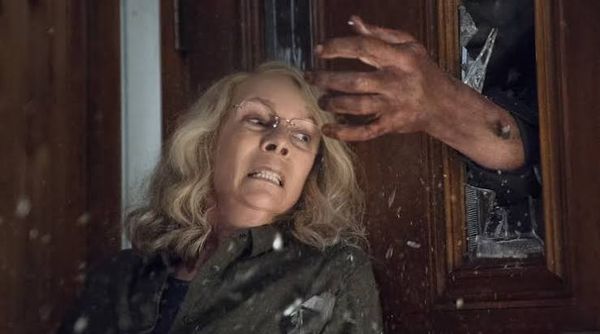
This also raises an issue I have with how the movie treats Laurie. At the beginning, she's a survivor doing her best to move on with her life. She's no longer fortified in a compound full of guns and shooting mannequins. She's living in a relatively normal house with her granddaughter, enjoying drinks with Lindsey Wallace, and apparently making an effort to put the past behind her. I'm not entirely convinced this transformation feels earned after everything that happened in the previous two films, but it's a sensible direction to take the character. The trouble comes when Laurie begins turning against Corey, the very person she encouraged Allyson to get to know. I understand why she becomes suspicious of him, especially given her history with Michael, but the transition from wanting Corey in Allyson's life to actively trying to drive him out of it feels awfully rushed. Suddenly, she's treating him as a potential killer, and we're supposed to accept that their relationship has deteriorated to the point where violence might be inevitable. There's an interesting story here about two damaged people who initially recognize something familiar in one another, only for that connection to turn into something dangerous. Unfortunately, Halloween Ends seems more interested in getting them to that confrontation than in making the journey convincing.
The town's treatment of Laurie is another story point I understand better in theory than in execution. Four years after Michael's rampage, some residents of Haddonfield have apparently decided that Laurie deserves a share of the blame for everything that happened. I can certainly believe that grief, anger, and fear might lead people to look for someone to blame, even when that person is as much a victim as anyone else. However, considering how the town came together to hunt Michael in Halloween Kills, I wish Ends had done more to explore how that collective trauma eventually turned into resentment toward Laurie. The movie presents an interesting idea: a community that can't move past its suffering and needs someone to blame, but it seems content to establish that hostility without developing it.
A stronger movie hides in all of this, one about collective trauma and how a community manufactures new villains when the old one disappears. The opening promises that movie. Corey’s first scenes promise it. Then Halloween Ends keeps getting distracted by the fact that it also has to be the movie with Michael Myers and Laurie Strode on the poster.
The Ending That Ends Up Somewhere Familiar
Eventually, Corey’s storyline collapses into the showdown we knew was coming. Corey turns up at Laurie’s house, and his death creates a misunderstanding that drives another wedge between Laurie and Allyson. I actually find the idea of Corey taking his own life to make Allyson believe Laurie killed him more interesting than much of the material leading up to it. It’s cruel, manipulative, and consistent with a character who has come to see himself through the town’s hatred. Unfortunately, the film barely gives the fallout room to matter before Michael arrives and takes over.
I’ve read about a proposed alternate ending in which Allyson would confront Corey while Laurie fought Michael, with Corey surviving in a way that echoed Michael’s disappearance at the end of the original film. That’s an intriguing possibility, although I’m not convinced a literal passing of evil would solve the movie’s problems. There’s also an odd wrinkle in borrowing that 1978 ending, since this trilogy’s continuity eventually has Michael apprehended shortly after Loomis shoots him “six times!” Still, it suggests the filmmakers were considering a more decisive handoff than the finished movie provides.
There is a moment where Laurie appears to be preparing to kill herself, and here Halloween Ends suggests it might be heading somewhere genuinely devastating. Of course, we soon discover that she's setting a trap for Corey, and I'm certainly not suggesting that actually having Laurie take her own life would have been a more emotionally satisfying conclusion. Still, something feels almost frustrating about how briefly the movie entertains that possibility before revealing its hand. Corey and Laurie have been on a collision course for much of the film, and this could have been the culmination of everything the movie has been exploring about trauma, resentment, and how evil spreads through Haddonfield. Instead, Corey is quickly dispatched, Michael arrives, and we're right back to the confrontation we've been expecting since 2018.
The fight itself should be cathartic. This is Jamie Lee Curtis and Michael Myers, after all. We’ve been doing some version of this dance for decades. Yet by the time it arrives, I’m less excited than I should be, partly because the movie has spent so long trying to convince me it’s about something else. The supposedly more traditional Halloween material somehow makes the film less interesting, not more.
Then Haddonfield gathers to help dispose of Michael’s body at the salvage yard. I understand the moment's intended finality. The whole town witnesses the destruction of the thing that has haunted it for the last forty-plus years; the town’s Boogeyman. However, after the mob material in Halloween Kills, I don’t particularly need another communal declaration that evil is finally finished. We already did that, loudly, and I wasn’t sold on it the first time.
For a movie called Halloween Ends, it’s remarkable how little closure I feel when it does.
A Swing Isn’t the Same Thing as a Hit
One defense of Halloween Ends that I genuinely respect is that it refuses to be another straightforward slasher sequel. I understand why some fans find that refreshing, and I’m glad the movie has passionate defenders. The series has spent years recycling the same basic formula, and there’s something appealing about filmmakers deciding they don’t want to do that again. I don’t think every Halloween movie needs to look exactly like Halloween (1978). If I did, I probably wouldn’t have made it through thirteen of them.
However, I also don’t believe a movie deserves credit simply for being different; different is a choice, not a measure of quality. Let’s be fair: Halloween: The Curse of Michael Myers, Rob Zombie’s Halloween II, and especially Halloween III: Season of the Witch all took considerable swings of their own. This franchise is hardly unfamiliar with detours. Hell, you could even argue that Halloween Ends is borrowing a page from Friday the 13th: A New Beginning, substituting a troubled young man for the franchise’s established killer. Granted, Ends throws in some supernatural ambiguity and a lot more psychological baggage. Corey is also considerably more interesting than Roy Burns, so I’ll give the movie that much.
It’s still a little discouraging because Corey could have been an effective new center for the story. Laurie and Michael could have had a satisfying final chapter. I don’t think this film finds a way to make those competing ambitions strengthen each other. It’s nearly two hours long, which is another way of saying it’s a slasher film that has violated my entirely reasonable proposed ninety-minute limit, and somehow it still doesn’t give its central ideas enough room.
I keep coming back to the opening. It’s focused, disturbing, and confident about what it wants to say. If the rest of the movie had maintained that focus, we might be having a very different conversation. Instead, Halloween Ends feels like a film pulled in several directions, right up until it chooses the safest destination available. For all the arguments it has inspired, I find the result less provocative than simply frustrating.
Thirteen Movies Later, Back to That Hedge
When I started Franchise Fixation, I wrote about watching Halloween on television as a five-year-old, wearing out the VHS recording, and spending the next several decades returning to it. I called it my comfort movie, which remains a strange thing to say about a masked man stalking babysitters. I also wrote that we’d eventually arrive at a movie that concludes a Michael Myers trilogy by spending a surprising amount of time not being about Michael Myers. Well, here we are. I had thoughts. I still do.
Revisiting the franchise has been fun, maddening, occasionally illuminating, and sometimes a test of my willingness to spend another evening in Haddonfield. I appreciate some sequels more than I used to. Some ideas are buried in bad movies that I wish someone had explored differently. Filmmakers and performers do worthwhile work even when the movie around them is a mess. I’m glad I revisited all of it, even the parts I didn’t particularly enjoy.
What I’m not convinced of is that Halloween ever needed to become this sprawling collection of timelines, family revelations, cult conspiracies, resurrections, reboots, and supposedly final confrontations. That doesn’t mean I wish every sequel out of existence. It means the farther we travel from 1978, the more extraordinary that original movie looks. Carpenter and Debra Hill didn’t need thirteen installments to explain why Michael Myers was frightening. They needed a neighborhood, a babysitter, a mask, a few notes on a piano, and the terrible possibility that someone might be standing just outside the frame.
The original Halloween ends with Michael gone and his breathing hanging over familiar, empty spaces. Halloween Ends gives us a body, a procession, and a machine designed to leave no doubt. I can appreciate the desire to put a period at the end of the sentence. But I think I prefer the movie that knew how much scarier it was to leave the sentence unfinished.
There will almost certainly be another Halloween someday. When it comes, I’ll watch it. I’ll probably have thoughts about that one, too. In the meantime, I’m happy to go back to the beginning: the hedge, the empty doorway, and the shape in the darkness. Thirteen movies later, that’s still where the magic is.
THE FIXATION SCALE
★½☆☆☆ —
1½ out of 4