I Play Rocky (2026)
The best part of making Rocky is the fight to get it made.

I’m usually out on biopics by the time somebody’s dad tells them they’ll never amount to anything. I know what’s coming. They’ll get their first taste of success, somebody will try to hold them back, and eventually they’ll find a way to make a mess of it themselves. Somewhere in there will be a scene I’d happily spend another twenty minutes watching, which is usually right when the movie decides it needs to skip ahead five years.
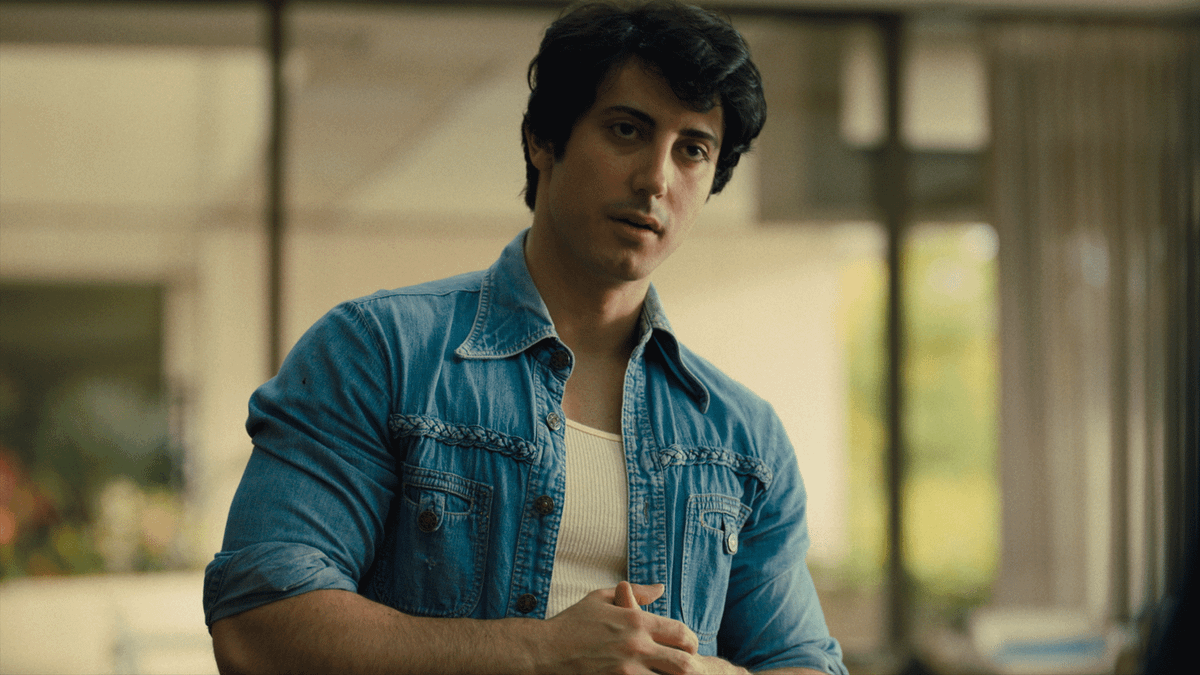
There are exceptions. 1974's Lenny works for me, and movies like Lincoln, The Social Network, and Capote give themselves room to get into the parts of those characters' lives that are more interesting. Peter Farrelly’s I Play Rocky takes a similar approach. By the time we meet Sylvester Stallone (Anthony Ippolito), he’s already had small parts in The Lords of Flatbush and Death Race 2000. The movie, however, briefly dips into his audition for an adult film. But the movie's main focus is how a guy with those credits wrote Rocky and talked anybody into letting him play Rocky Balboa.
The Fight Before the Fight
I think most of us know the story by now, but here’s the short version. Sylvester Stallone writes Rocky over a weekend. Convincing anybody to let him play Rocky takes a little longer.
Getting producers Irwin Winkler (P.J. Byrne) and Robert Chartoff (Toby Kebbell) interested in Rocky turns out to be only half the job. Once there’s real money on the table for the script, he has to decide how much he’s willing to give up to keep the role. By this point in the movie, we've already watched Stallone dodge landlords and get desperate enough to sell his dog, which gives some weight to all that money he’s turning down. For anyone who needs to know before they buy a ticket, he gets the dog back.
That’s also where the parallel with Rocky Balboa makes the most sense to me. In Stallone's script, Rocky has spent years as a fighter with little to show for it, and Stallone has been around long enough to know how little a couple of screen credits can do for you. The fun of watching him write the script is seeing him create the opportunity he’s been waiting for. There’s a difference between hoping somebody will see what you can do and handing them a script that actually shows them. Of course, that still leaves the problem of getting them to read it.
Once the producers want to make Rocky, the easiest way for Stallone to get his script on the screen is to give up the part he wrote for himself. Somehow he’s got to convince the studio that they need him over Charlie Bronson or Ryan fucking O’Neal. That’s the best stretch of the movie. I knew exactly who was going to play Rocky Balboa, and I still wanted to know how the hell Stallone would talk them into it.
It helps that the producers’ interest in the script feels genuine. You can see how Winkler and Chartoff might read it, think they’ve found a good picture, and then immediately start thinking about who they can sell as the lead. The more they like the script, the more sense it makes that they’d want an established star. The movie also establishes they'd actually read a different Stallone script first, Paradise Alley, which he tried to sneak into their weekend-reading pile when visiting their offices; a story, if it's true, I didn't know. So they already knew he had the chops. Rocky was just a script they were more interested in making.
I was a little worried about Ippolito after seeing the trailers. Stallone’s voice and the way he carries himself are so familiar that I figured I’d spend two hours grading an impression. I got over that pretty quickly. What I liked about Ippolito was how well he played the gap between how sure Stallone is that he should play Rocky and how little he has to bargain with. It’s funny watching him insist on something so audacious, especially when you know how easily the people across the table could walk away.
There’s also something funny about the assignment Ippolito has been given. He’s playing an actor who has to convince a room full of people to see him as a leading man, while convincing an audience that already knows exactly what that leading man sounds like. The voice probably gets you through the first few minutes. What held my attention was how Ippolito plays Stallone across from Byrne and Kebbell. You can watch the guys with the leverage try to figure out how seriously to take him. That’s more interesting to me than whether he gets every syllable right.
Once the Cameras Start Rolling
Byrne and Kebbell are both good company, and Tracy Letts gives the negotiations some bite as studio head Sandy Maddox, a fictional character. Jay Duplass is especially fun as John Avildsen, who gets the Rocky directing job because he can make a movie quickly and on budget. I enjoyed watching him work with Ippolito, and there’s a certain pleasure in seeing moments from Rocky come together on set. I felt the movie lose some urgency there, though. I was more invested in whether Stallone could hold out for the part than in seeing how closely Farrelly could recreate scenes I’ve watched for years.
AnnaSophia Robb is excellent as Sasha Stallone, and she and Ippolito have the chemistry to make me want more of their life together. Some of their scenes felt like they were asking me to feel the cumulative strain of a marriage the movie had only given me glimpses of. I understand why the script spends so much of its time on Stallone trying to keep the part. I would’ve happily traded a little of the time spent revisiting Rocky for more time with the two people who had to live with that decision.
Sasha is also where I most wanted the movie to push back a little harder on the way we tell this story. From our side of it, Stallone’s refusal to sell the script without the part looks like a great act of self-belief. We know what came of it. Imagine having to talk about that same decision at home, with bills to pay and no idea when another offer might come. What does it cost to back somebody else’s certainty? We get a couple of quick scenes around this dilemma that don't add much weight to the overall picture. And as already mentioned, Robb is so good, it made me want to spend more time on that question, especially as the movie moved toward giving Stallone the victory we came to see.
I grew up in the ’80s, so of course I’m a Rocky fan. I’m looking forward to getting into the whole series in a future Franchise Fixation, and I suspect that’s part of why I was still having a good time even as this started to feel like a more conventional biopic. The original Rocky is one of the great crowd-pleasers, and what keeps me coming back is how much of it is about two lonely people finding each other. I Play Rocky feels closer to one of the sequels. It gets you rooting for the guy, it knows how to send you out happy, and I had a good time with it. I just wish it had spent a little more time with Stallone before anyone was cheering.
Also, if you are having a good time with the movie, make sure you stay and watch the credits.
THE FIXATION SCALE
★★★☆
3 out of 4
Thanks for reading. I love getting to write about movies here, and I want to keep these reviews free to read and free of ads. If you’d like to help me do that, you can chip in through the Support link at the top of the site. I appreciate you being here either way.